
Glutathione
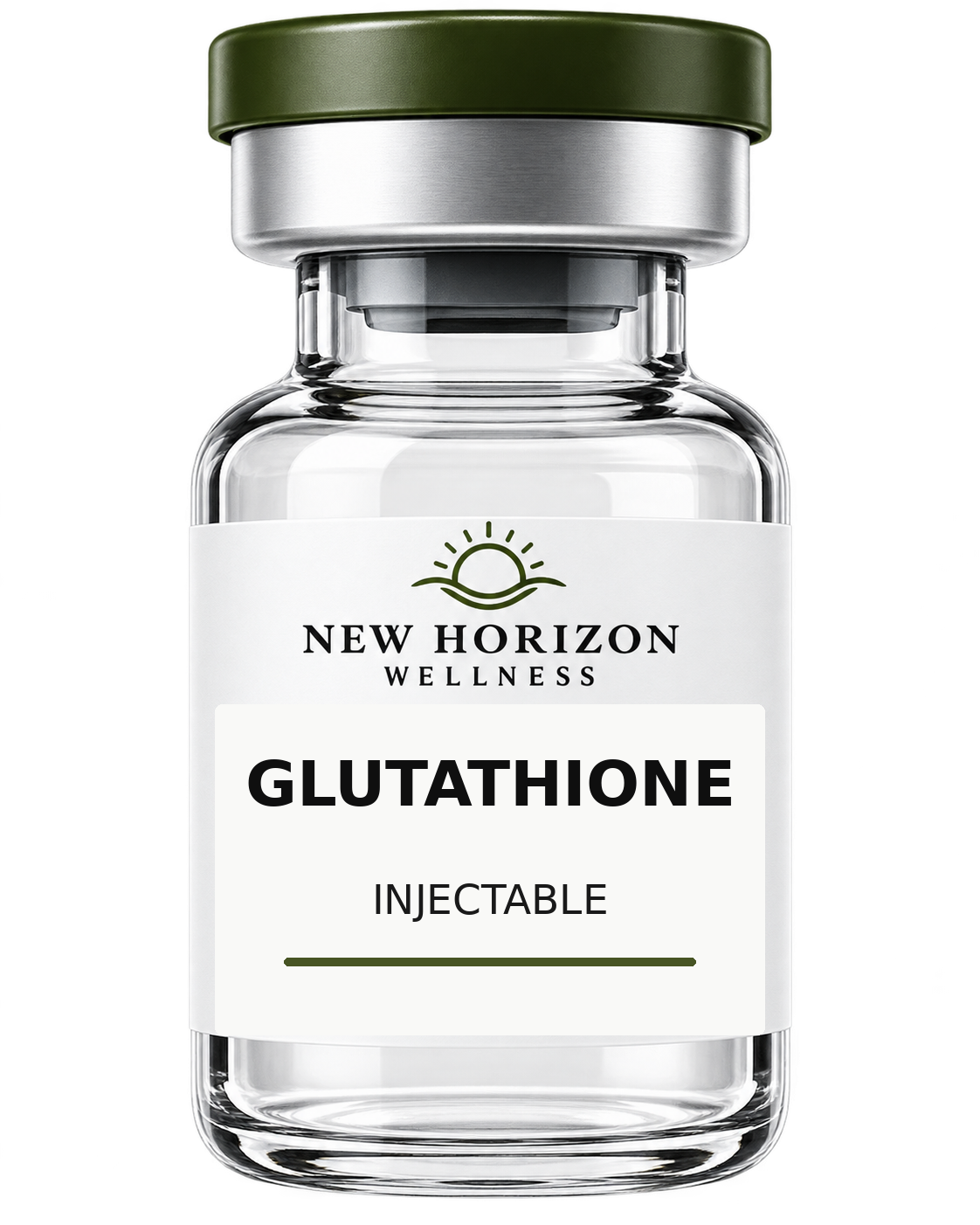
Glutathione is a naturally occurring antioxidant made from three amino acids — glutamate, cysteine, and glycine. It is produced throughout the body and plays important roles in antioxidant defense, cellular redox balance, detoxification pathways, and normal cellular function.
What Is Glutathione?
Glutathione, often abbreviated GSH, is a tripeptide synthesized naturally by human cells. One of its best-established functions is helping maintain cellular redox balance by participating in reactions that neutralize reactive molecules and regenerate other antioxidant systems.
Glutathione also participates in enzyme systems involved in processing certain endogenous compounds and foreign substances. Its biology is closely connected with liver metabolism, cellular defense, and maintenance of the intracellular environment.
Although glutathione is technically a tripeptide, New Horizon categorizes injectable glutathione as a supportive therapy rather than alongside signaling peptides such as BPC-157 or Sermorelin.
How Glutathione Functions in the Body
- Helps maintain intracellular antioxidant and redox balance
- Participates in glutathione peroxidase antioxidant reactions
- Supports glutathione-S-transferase conjugation pathways
- Helps regenerate and interact with other antioxidant systems
- Participates in cellular responses to oxidative and metabolic stress
What Does the Research Show?
Glutathione biology is supported by a large scientific literature, but clinical evidence for supplementation varies substantially according to the route, formulation, population, and outcome being studied.
Human trials of oral glutathione have examined absorption, glutathione-related biomarkers, oxidative-stress measures, and other outcomes, with mixed findings across formulations. A 2026 randomized crossover pilot in healthy adults demonstrated that oral formulations can differ in their effects on circulating glutathione-related measures.
Evidence for injectable glutathione in general wellness is much more limited. Research in specific medical or cosmetic settings should not be generalized to claims that injectable glutathione improves energy, immunity, recovery, longevity, detoxification, or overall health.
Why Patients Ask About Glutathione
Goals commonly discussed include:
- Antioxidant and oxidative-stress-related wellness interests
- Cellular-health and recovery goals
- Healthy-aging and general wellness interests
- Questions about liver and detoxification pathways
- Interest in glutathione status and antioxidant biology
These are discussion areas, not established indications or guaranteed clinical outcomes.
What to Know
Compounded injectable glutathione is not an FDA-approved drug product for anti-aging, detoxification, immune enhancement, energy, recovery, or general wellness. Compounded drugs do not undergo FDA premarket review for safety, effectiveness, or quality.
In August 2026, FDA again warned compounders not to use dietary-supplement-grade glutathione to prepare injectable drugs. FDA reported adverse events in at least 30 patients following IV glutathione alone or in combination, including fever, chills, pain, dizziness, and sepsis-like symptoms, with some hospitalizations. The agency's investigation focused on inappropriate ingredients and excessive endotoxin exposure.
Glutathione is currently listed by FDA as a Category 1 bulk substance under evaluation for use in compounding under section 503A. Category 1 status is not FDA approval and does not establish safety or effectiveness for a particular use.
A provider should review health history, medications, treatment goals, formulation, route of administration, and the source and quality of the compounded product before injectable glutathione therapy is considered.
Interested in Glutathione?
Schedule a consultation to discuss your goals, current health, and available treatment options.